Triumph TR6 Buyers Guide
The frame decides most TR6s: where it rots, how to tell, and then the body, the engine's thrust washers, the injection or the carburettors, the running gear, and the commission number that says whether a car is what it claims to be, original or converted.
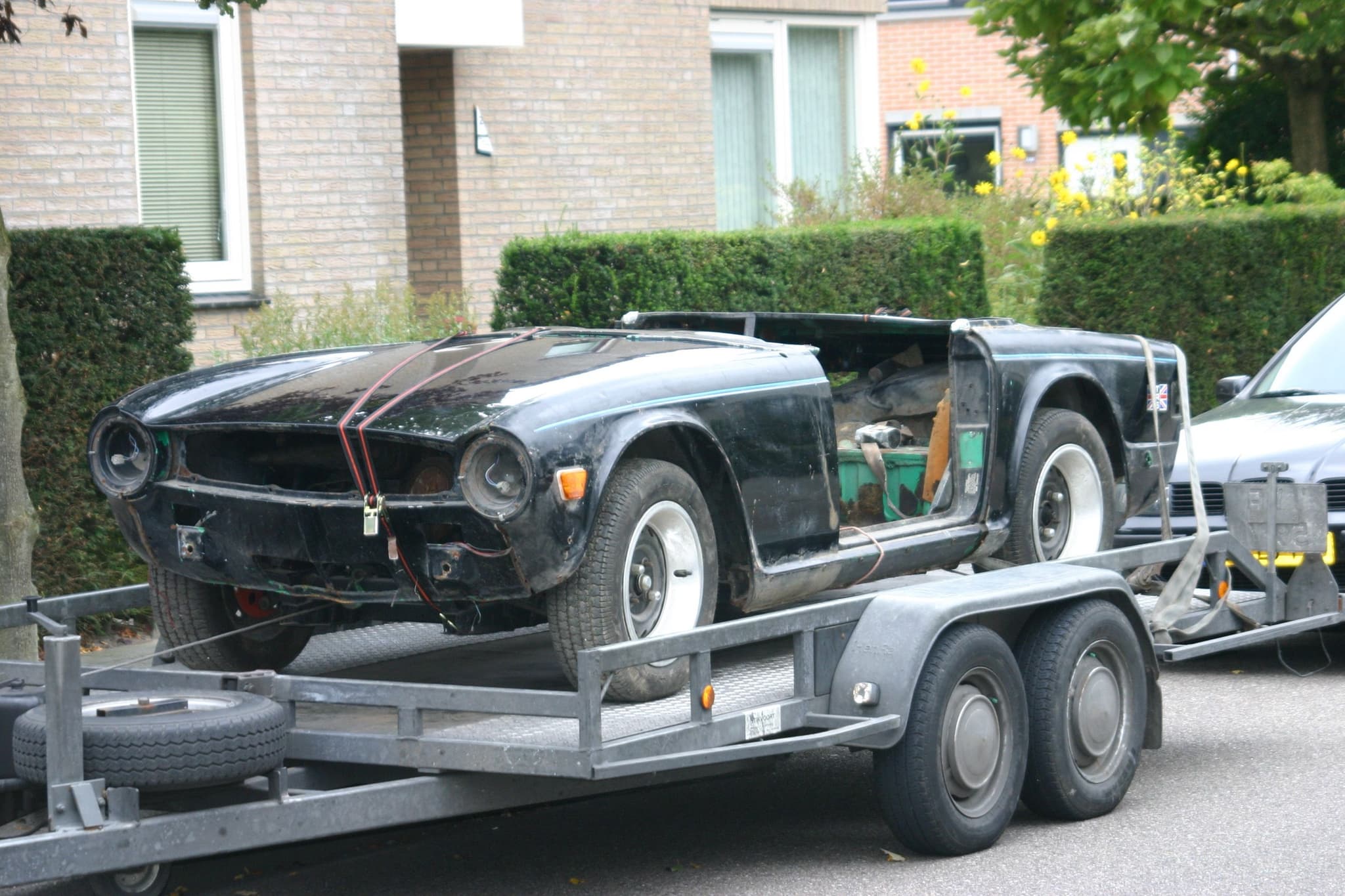
About the pictureA bare TR frame that its photographer names a TR6 chassis (2008), standing in for an inspection on a lift
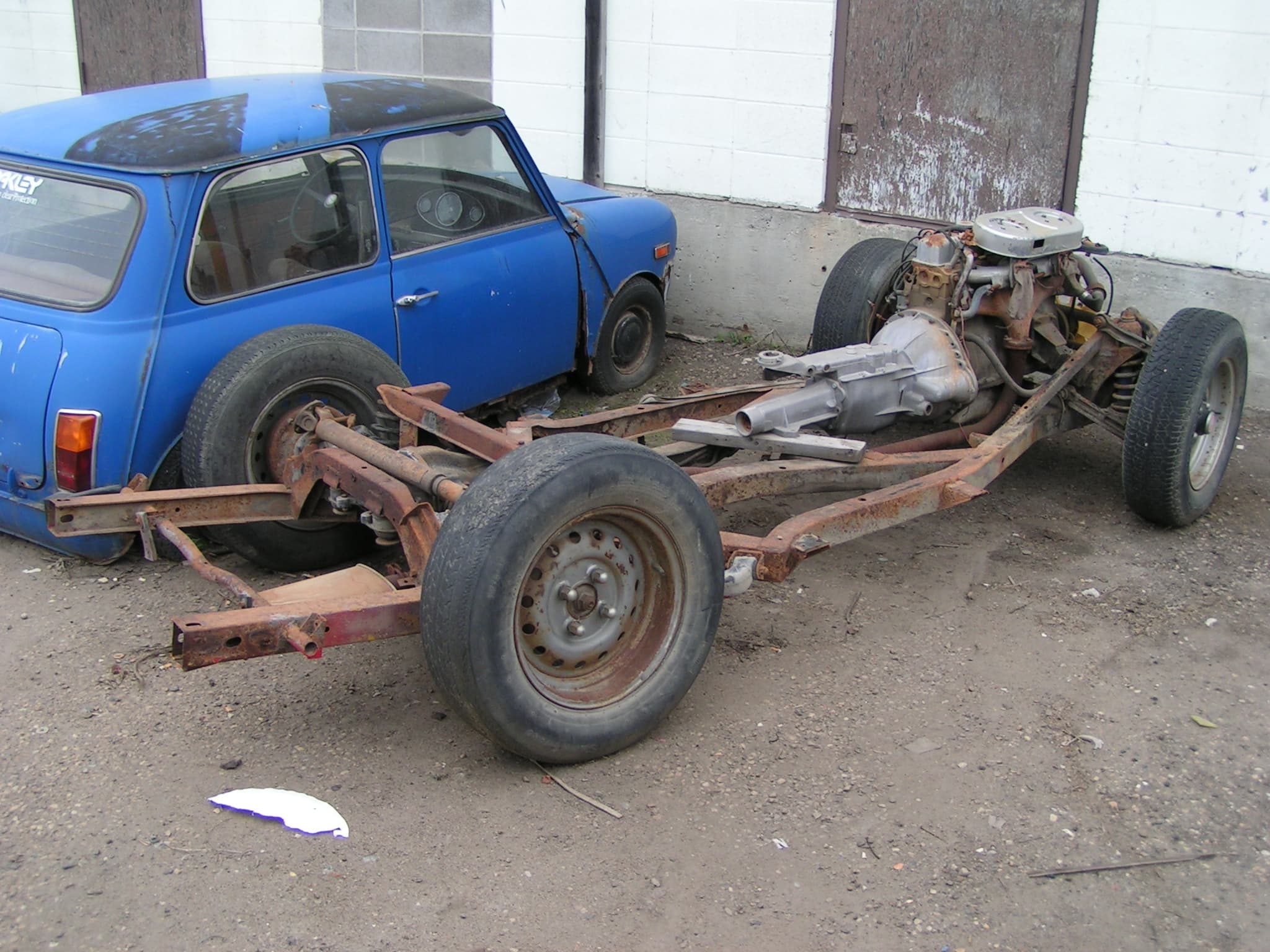
Every guide read agrees on what matters most. The TR6 sits on a separate frame, and rust in the rear half of that frame decides whether a car is worth buying; then come the body, the engine, the fuel system and the running gear, all of which can be put right, and last the question of what the car really is, which only its numbers answer. This guide draws on the TR Register, the Vintage Triumph Register, TR-Register Deutschland, Practical Classics and Hagerty.source 1source 2source 3source 4source 5
Structure and rust, by area
The frame is built of steel channel pressings, boxed into side members and braced by a cross-shaped member in the middle. The TR Register's advice is blunt: "The rear half should be thoroughly checked for corrosion, with the 6 cylinder cars appearing to suffer more than the TR4A." The front half is usually protected by oil, but look there for damage from accidents, and check the horns of the frame at both ends for kinks.
The worst place is where the semi-trailing arms of the rear suspension are mounted: crossmembers between the side rails, whose overlapping plates rot from the inside. Practical Classics sends you to the area just ahead of the rear wheels, where the frame members meet between a pair of bracing plates, and the Vintage Triumph Register leaves no doubt about what rust there means:
If there is rust on these pieces, get up, dust yourself off, and say 'Thanks, but no thanks'.
Unless you want a project, that is. The rails are pressed steel spot-welded together, and they trap moisture inside, so rust shows first as blisters along the seams. A frame weakened enough will bend in the middle, and the sign, Practical Classics says, is door gaps that open at the top; the Vintage Triumph Register adds doors that are hard to open or shut. The differential hangs from two bridges between the rails on four bolts that TR-Register Deutschland calls too weak from the start for the engine's torque; they tear out, usually the front right first, and a clunk as the drive is taken up is the warning, easily mistaken for worn universal joints. At the front, the brackets for the lower wishbones crack, and kerb damage is common; late TR6s had reinforcing plates from the factory, which are worth adding in any repair.
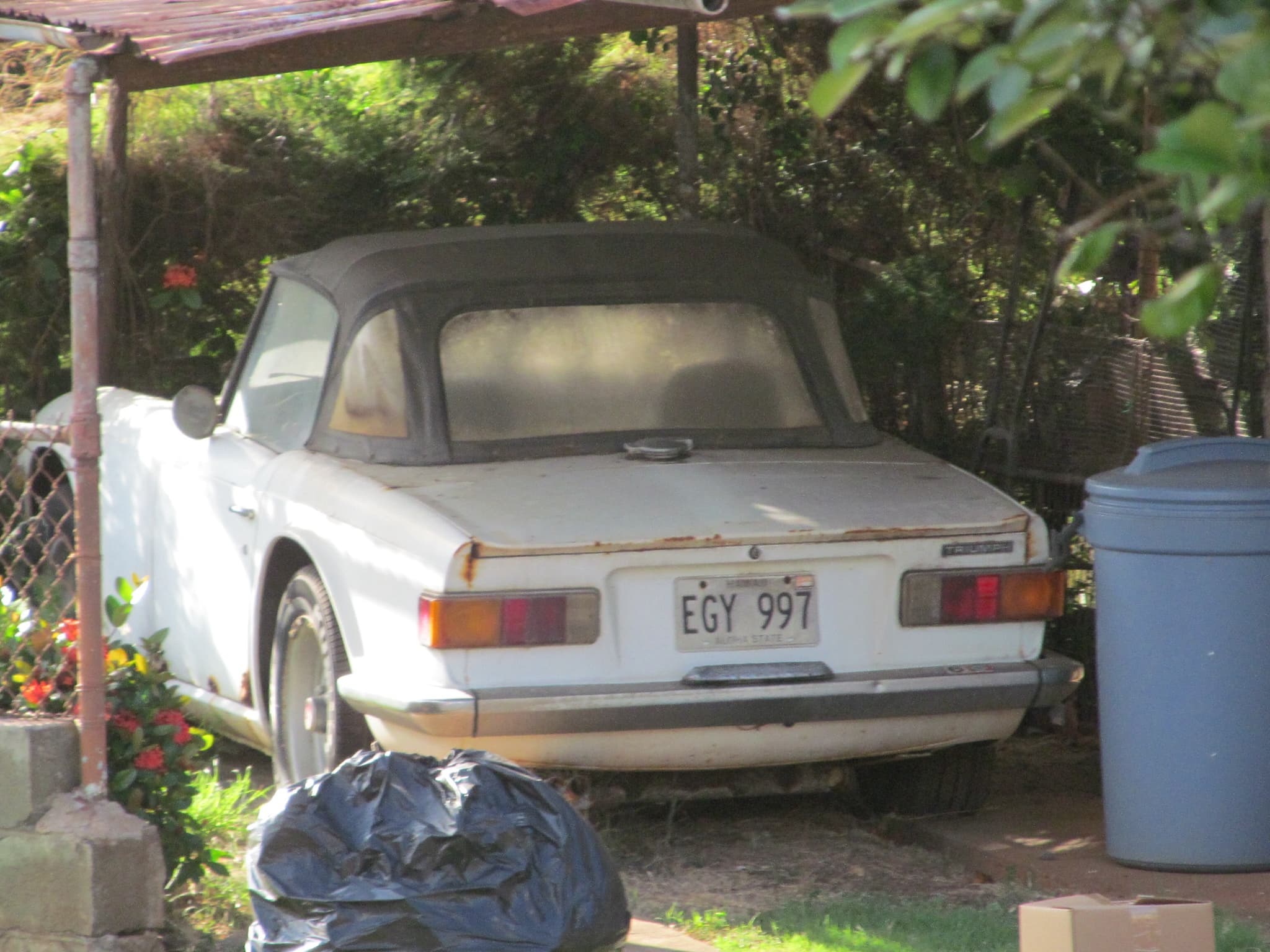
On the body, look at the front wings (fenders) around and behind the headlamps and where they meet the bulkhead, and under the battery and the master cylinders, where acid and brake fluid strip the paint. The base of each B-post rots where it meets the sill (rocker panel), and the seat belt is anchored there. Check the floors under the pedals, the seams where the rear deck meets the rear wings, the wings' tops and edges, the boot (trunk) floor and the spare-wheel well, and the rear edge of the boot lid, which is double-skinned. Inner panels should be the body colour, the TR Register notes. As Kelvin Dodd, technical expert at the parts supplier Moss Motors, told Moss Motoring: "There's no easy way to fix rust at these common spots."source 6source 1source 2source 5source 3source 4source 7source 8
Engine
The six is strong. Its known weakness is the crankshaft thrust washers, which wear and can fall out. The Vintage Triumph Register's test needs two people: push the crankshaft pulley back, have someone press the clutch, and feel how far the pulley moves forward. "If the distance approaches 1/8″, you can bet that the thrust washers have fallen into the oil pan," it warns; caught in time, Practical Classics says, oversized washers can go in without taking the engine out. In 1974 Motor Sport suspected excessive end float in its own TR6, a problem its readers reported as common.
Check the oil pressure warm: TR-Register Deutschland looks for more than 3 bar (40 psi) with the engine revving, and Moss Motoring warned in 1994 that much less than 3.4 bar (50 psi) at idle may mean an overhaul soon. TR-Register Deutschland also wants all six cylinders above 10 bar on a compression test, and brown foam under the oil filler cap can mean a head gasket, or only short journeys. The rocker gear wears quickly; unbushed rockers have to be replaced. Hagerty gives the engine about 160,000 km (100,000 miles) before it is tired, Practical Classics over 190,000 km (120,000 miles) with regular oil changes. The rear main seal weeps unless it has been converted, and the correct thermostat, TR-Register Deutschland says, opens at 82 °C.source 2source 3source 9source 5source 7source 4
Fuel injection (TR6 PI)
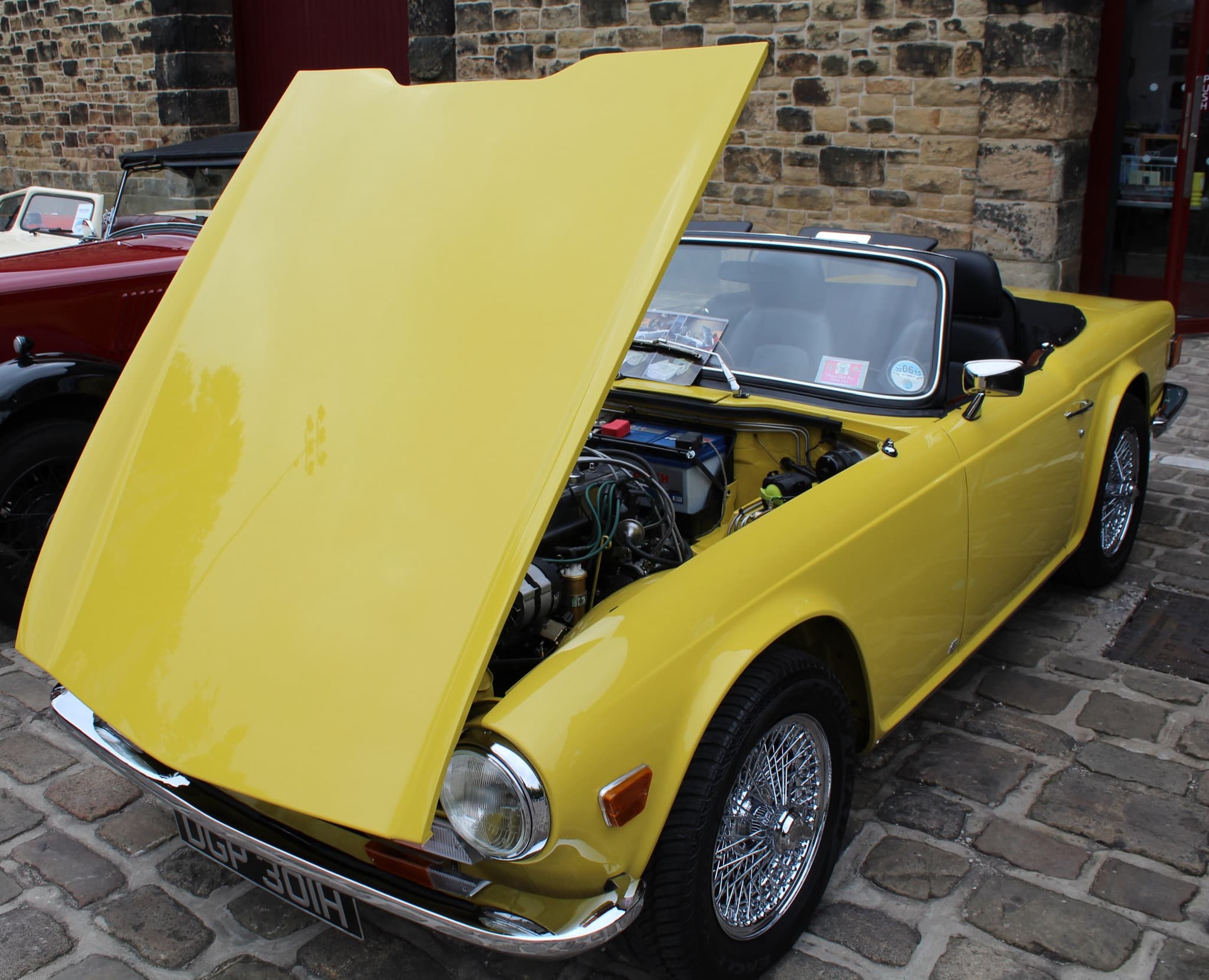
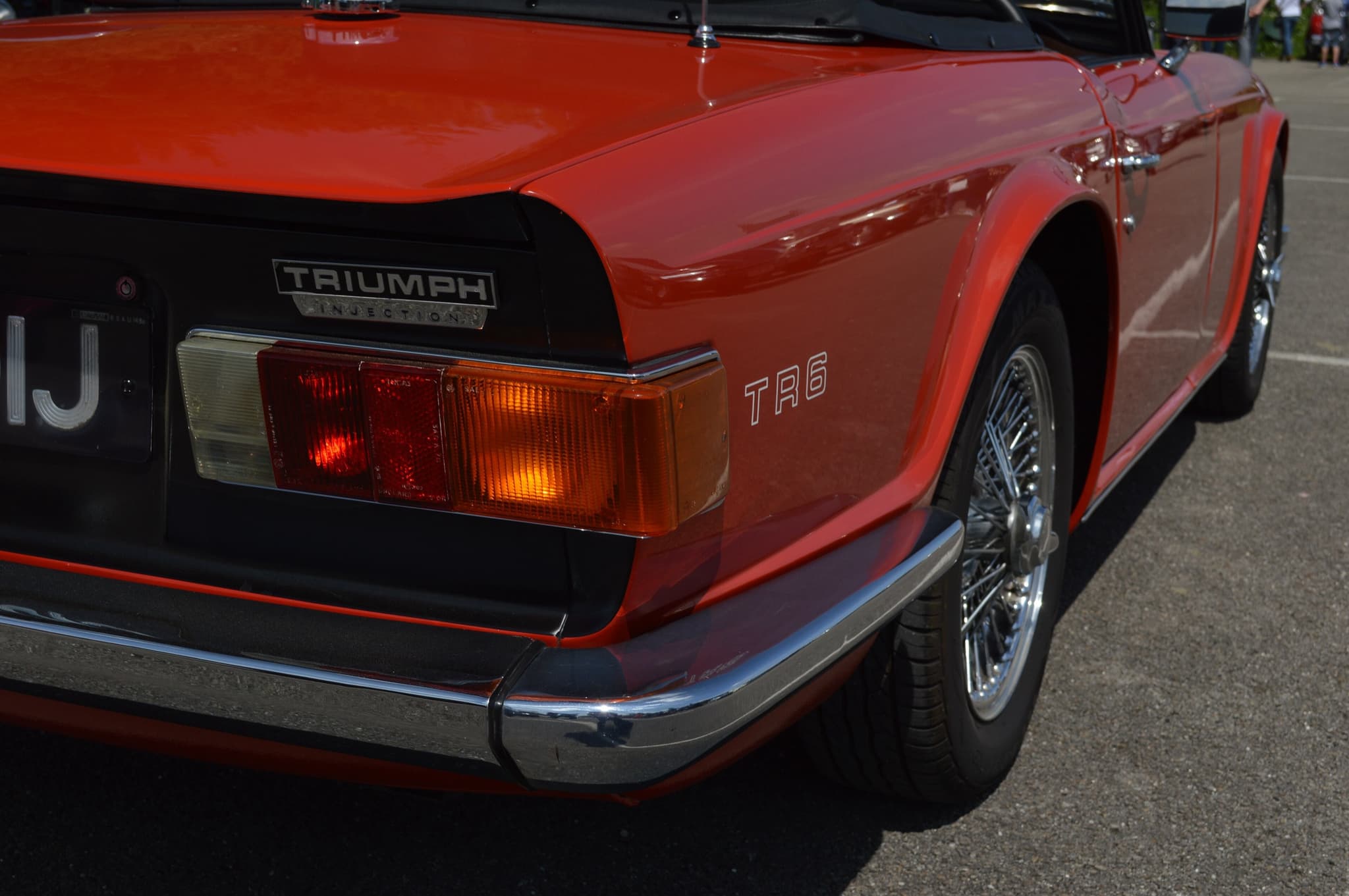
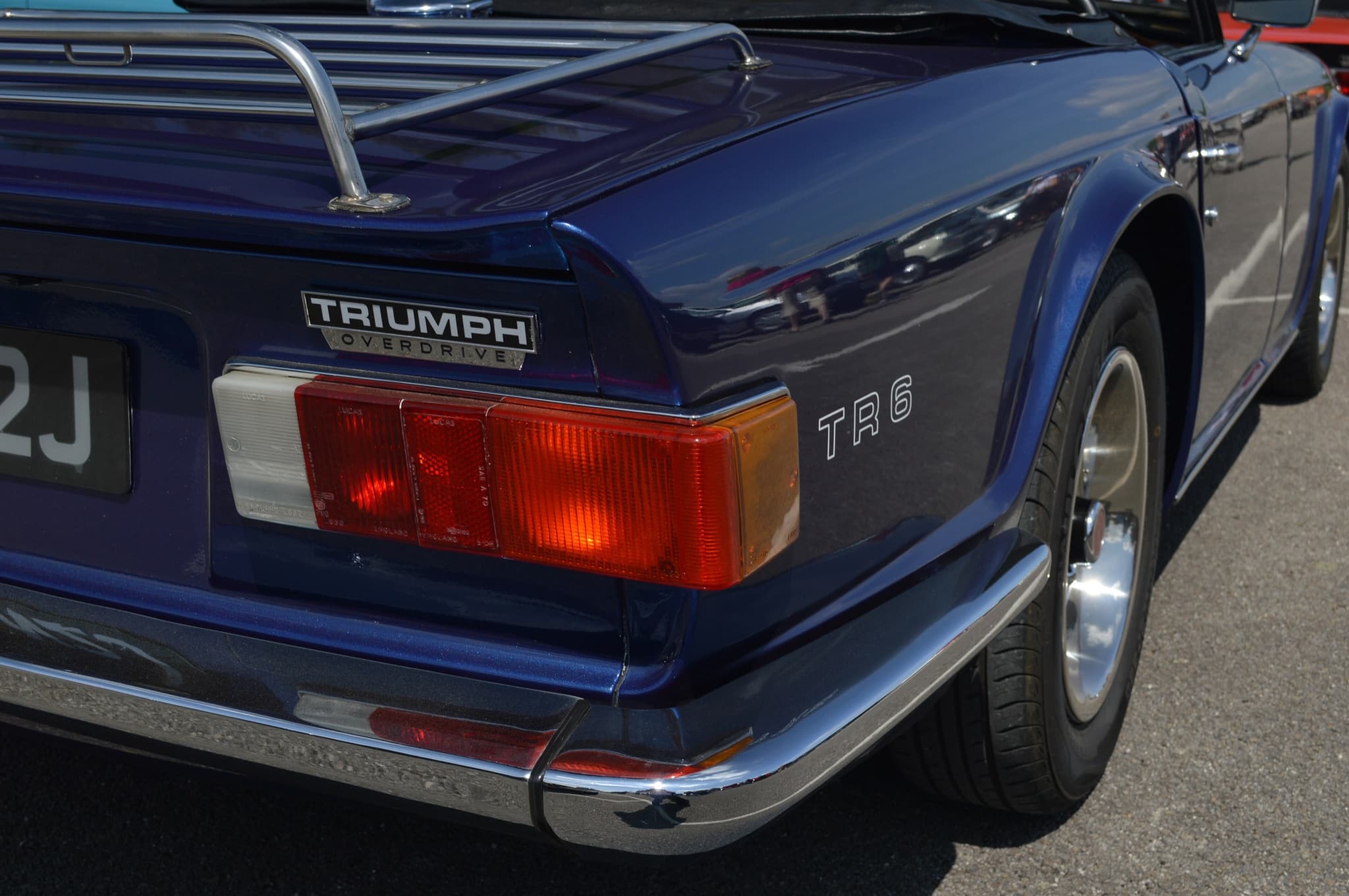
On a TR6 PI, black smoke when the engine is blipped warm means it is running rich. Hot starting, vaporising fuel and a misfire on starting are the known faults, and Practical Classics calls them easily fixed today; the Lucas pump overheats, and a Bosch pump is the usual replacement. Each of the three throttle spindles can wear and admit air, and on CR cars the throttle linkage wears and upsets the balance between the cylinders, TR-Register Deutschland adds. Hagerty's advice is to buy a car whose system has been properly looked after, since it "takes a specialist to fettle". A badge proves nothing: the commission number, beginning CP or CR, shows a car built with injection.source 3source 5source 4source 9
Carburetted cars
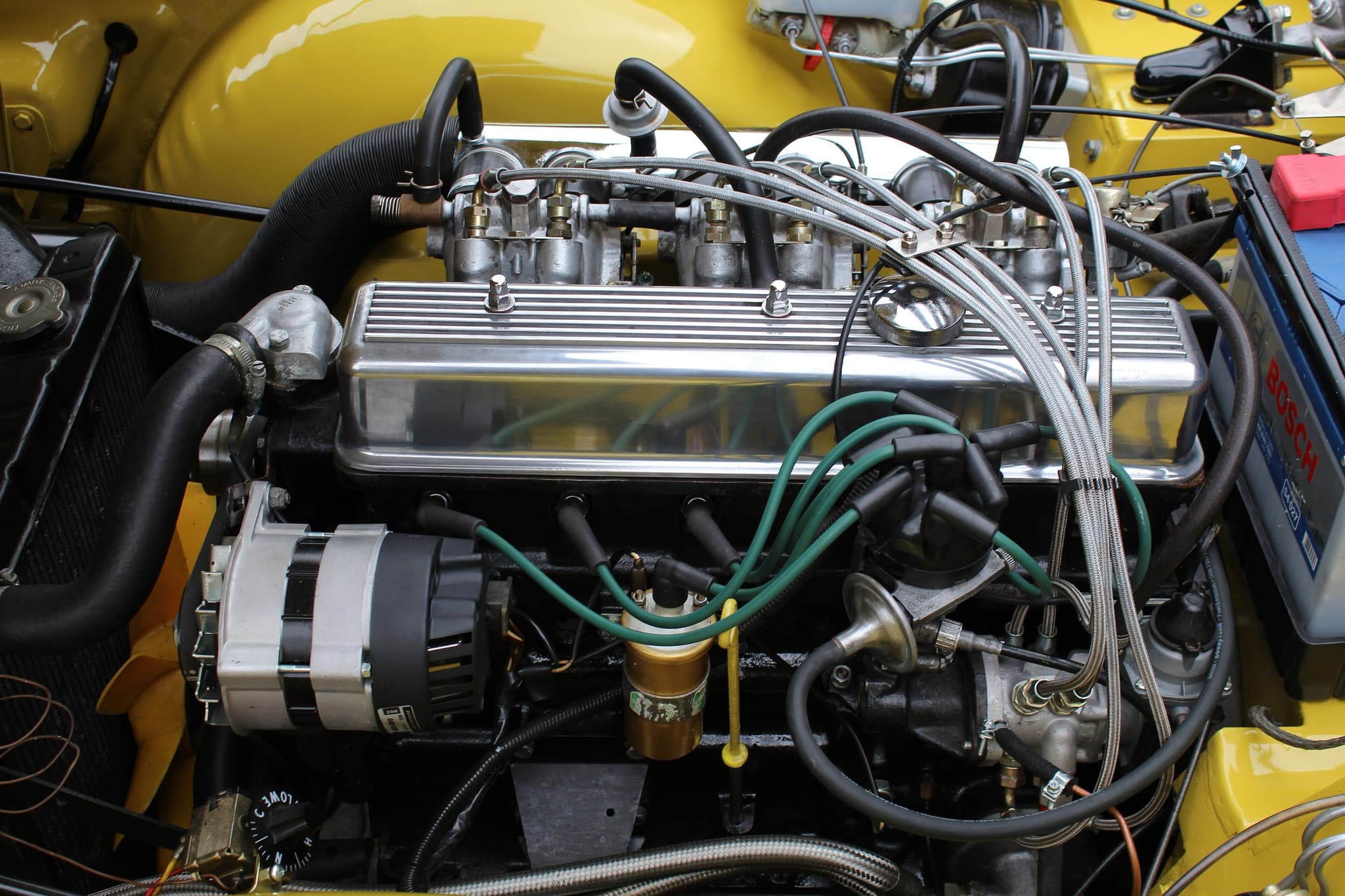
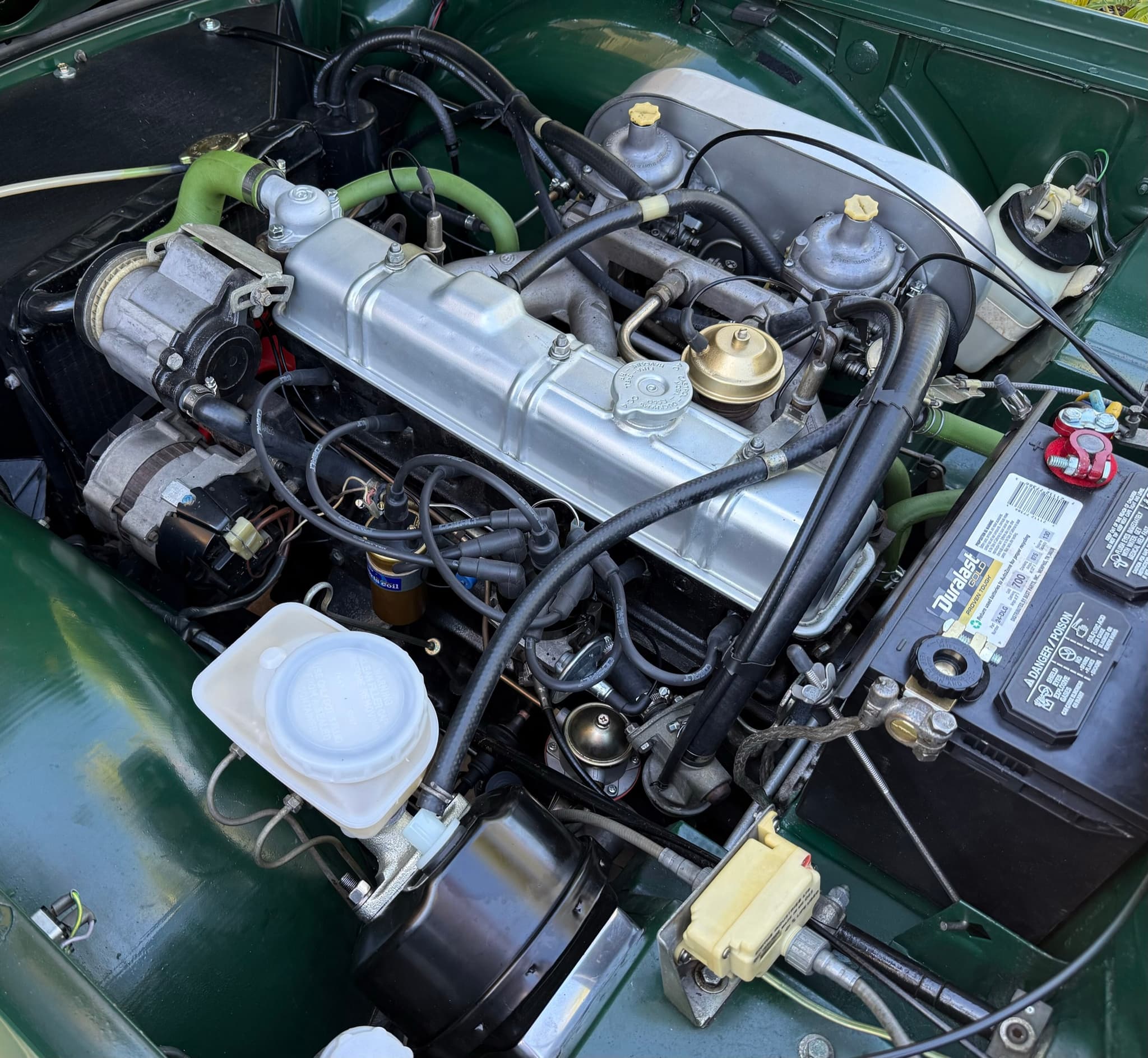
On American cars, check the Stromberg carburettors' throttle spindles for play. Much of the emission equipment of the later model years, the recirculation valve, the canister and the air pump, has often been taken off, and whether a car should have it depends on its model year, which the US TR6 page sets out.source 5source 10source 2
Transmission and running gear
A gearbox (transmission) with worn layshaft bearings rumbles in the intermediate gears and hisses at rest until the clutch is pressed; second-gear synchromesh is a known weakness. The overdrive, an A-type on early cars and a J-type on late ones, should engage and release promptly, with a drop of about 500 rpm; faults are usually in the wiring, the relays or the solenoid. To test the clutch, try to pull away in third with the handbrake on: a good clutch stalls the engine. The importer warned owners in 1972 that an overdrive stuck in engagement would destroy itself if the car were reversed before it was repaired.
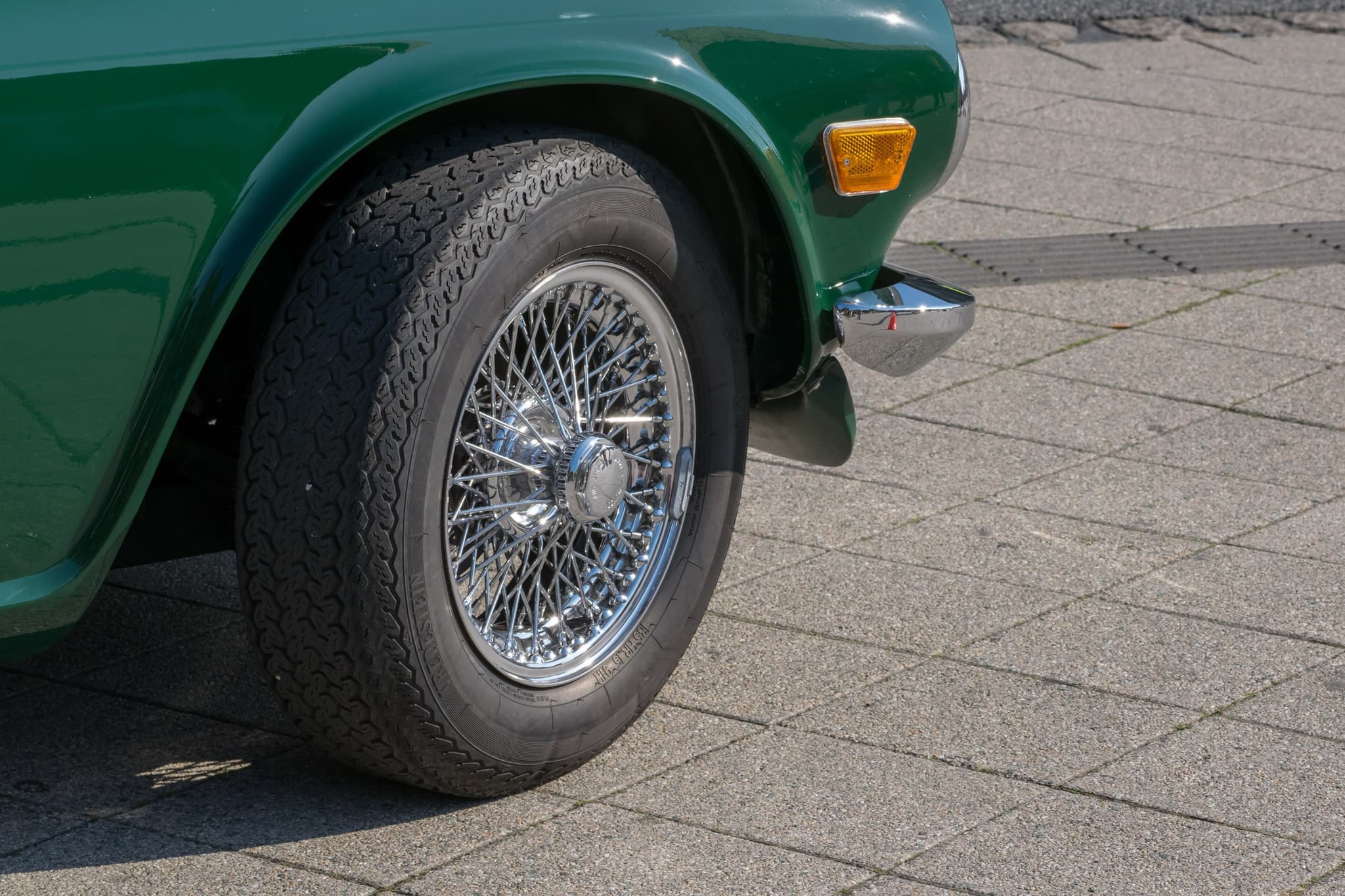
The differential is a ball-bearing unit that usually has to be exchanged rather than rebuilt. The rear hub bearings are sealed and need special tools, and the Vintage Triumph Register's advice is "Farm out hub rebuilding!" A TR6 has six universal joints; check them by hand for play, and listen for clunks on take-off. The aluminium trailing arms can crack, and the original lever-arm dampers wear. At the front, the trunnions need gear oil or a fluid grease, not ordinary grease, which hardens, and the rack's mountings on old rubber bushes make the steering vague. On cars with wire wheels, check the adapters, hubs and spokes, and replace bent spokes.source 3source 5source 7source 2source 1source 4source 11
Electrics
The electrics are Lucas throughout. Look for brittle wiring and for circuits joined where they should not be, an owner told Hagerty, and Practical Classics warns that old looms and connectors may be giving trouble by now; otherwise the Vintage Triumph Register knows of "no particularly unusual electrical problems".source 4source 3source 2
Interior
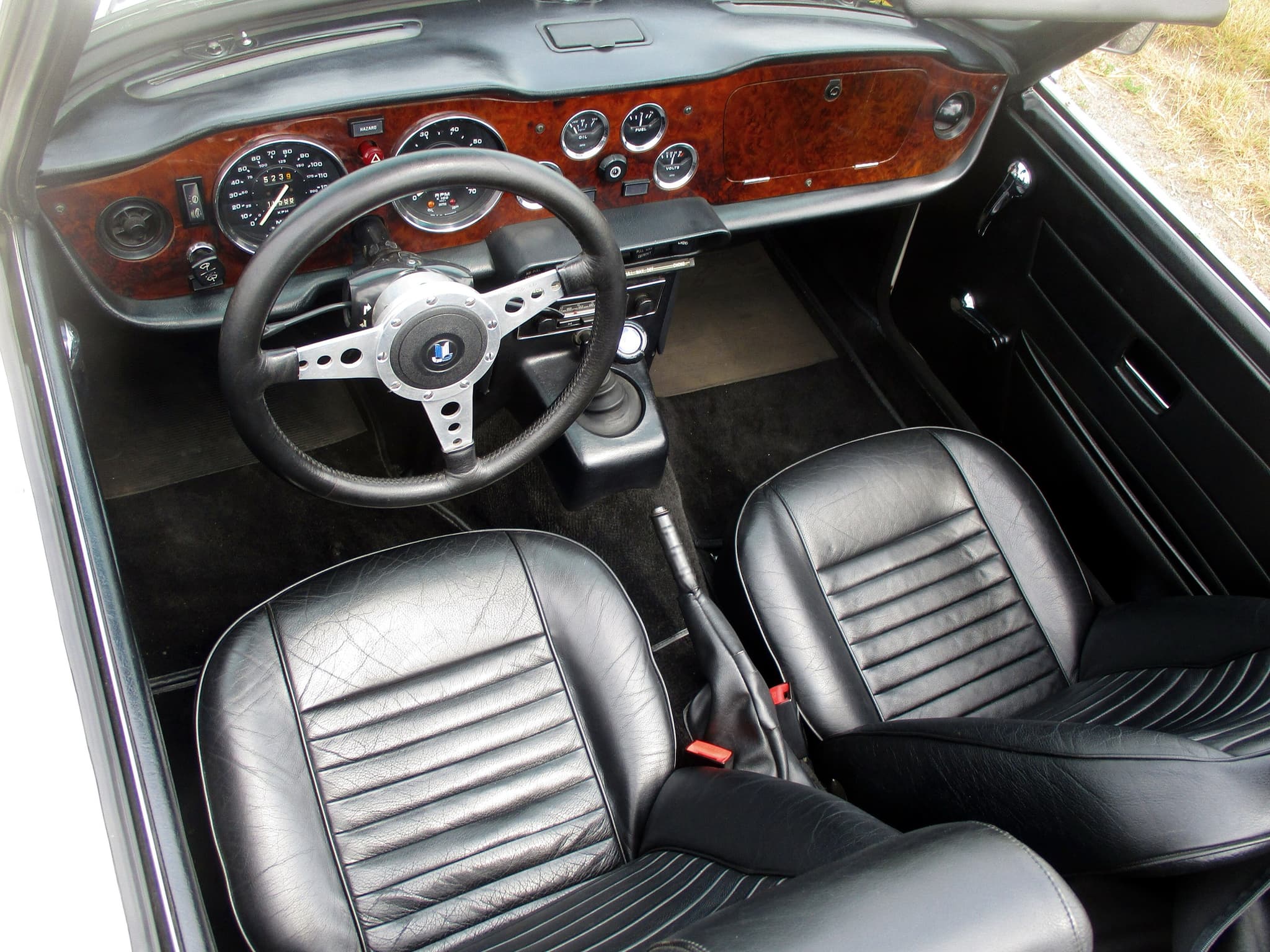
Original or converted
Start with the numbers. The commission number on the plate should match the one on the registration papers, and the engine number's prefix should match the commission number's: an injected car's begins CP or CR, a carburetted car's CC or CF. Many American cars have come back across the Atlantic, and the TR Register spells out what that means:
Many TR6 have been re-imported from the US and converted to RHD and in some cases fitted with fuel injection so other than the commission number it will be difficult to differentiate these cars from a genuine UK market TR6 if the conversion has been professionally carried out.
Not every American car came from a dry state, the TR Register adds, though Hagerty thought in 2014 that, for a British buyer, they made the better starting point. The car Classic & Sports Car drove in 2023 was one: an American TR6 converted to right-hand drive and British specification, with injection fitted later, given away by its extra side repeaters. Identification explains the numbers.
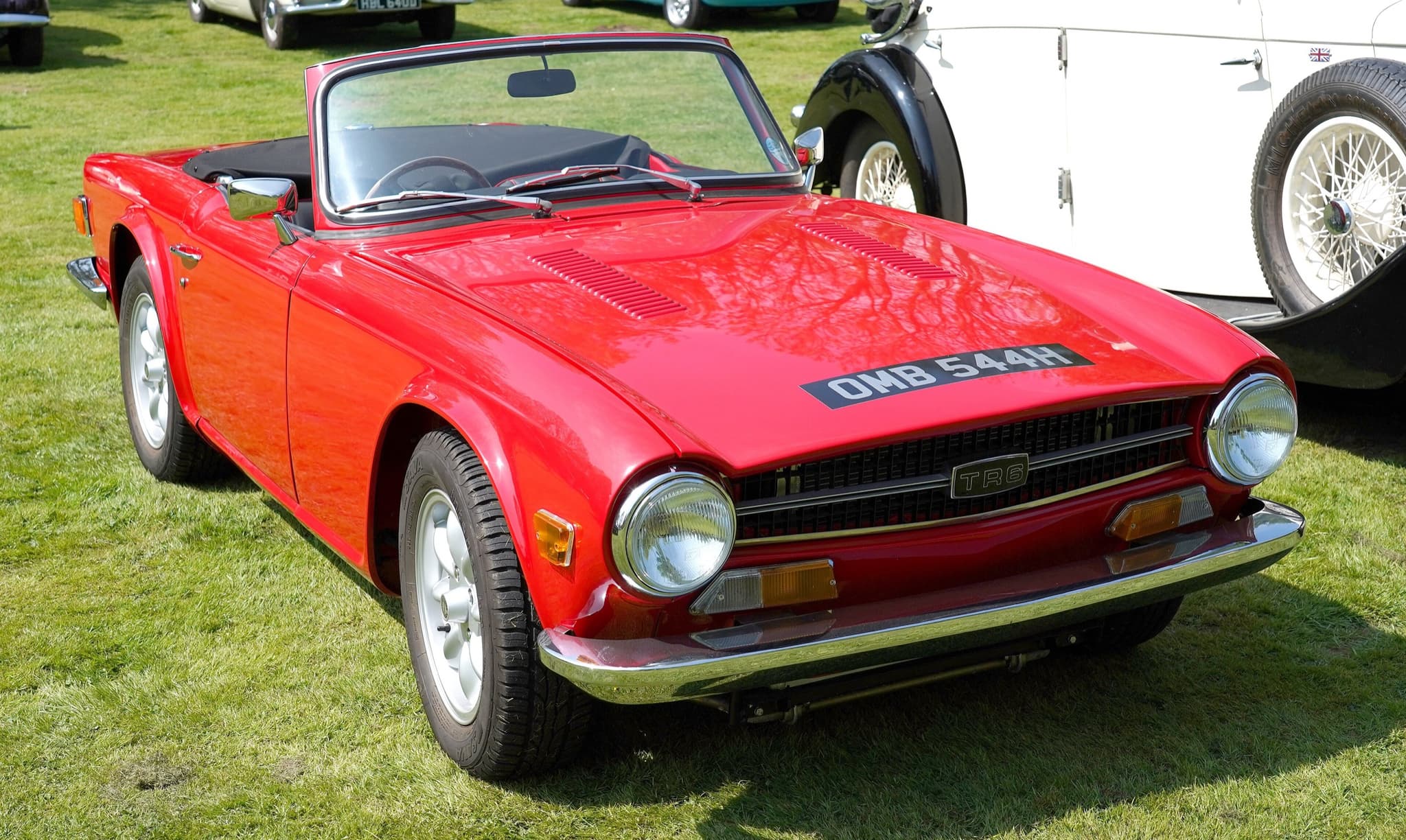
Modification is common: Practical Classics lists the usual changes, to the cooling, brakes, steering, suspension and fuel pump, and the modified page sets them out. Whether they suit a buyer is a matter of taste, but a modified car is not an original one, and some changes, like the bonnet vents in the picture, cannot be hidden.source 1source 12source 4source 5source 3
Restoration and parts
The body is held to the frame by about a dozen bolts, and new frames and bodyshells are made. Most parts are available. TR-Register Deutschland warned in 2010 that many reproduction parts were poor, that new body panels needed long work to fit, and that wheels and some instruments were not remade; it also warned that a local garage may be out of its depth with a TR6, its imperial sizes and its special tools. The parts and specialists page goes further.source 8source 13source 4source 2source 5
Inspection checklist
The numbers
The commission plate, the registration papers and the engine number's prefix agree; the suffix and the plate's position fit the car's market.
The rear frame
On a lift: the trailing-arm mountings, the cross-shaped brace and the differential mountings, for rot and tearing.
The front frame
The wishbone brackets for cracks, and the frame horns at both ends for kinks.
The doors
Even gaps from top to bottom, and doors that open and shut easily.
The body
Front wings and headlamp areas, the battery tray, B-posts and sills, floors, rear deck seams, the boot lid's edge and floor.
The engine
Crankshaft end float, warm oil pressure, compression, and noise from the rocker gear.
The fuel system
On a PI, black smoke, hot starting and the pump; on a carburetted car, the throttle spindles.
The transmission
Gearbox noise, overdrive engagement and a slipping clutch.
The drive line
Clunks on take-off, from the joints, the drive shafts or the differential mountings; play in the rear hubs.
The electrics and instruments
The state of the wiring, and the right instruments for the car.source 1source 2source 5source 3source 4source 12
Sources
Sources are given as plain text; their addresses are on the sources page.
- Primarymade at the time, by the maker or by people who were there
- Referenceserious later work: clubs, specialists, magazines, books
- TR Register, "Buyer Beware: TR6" (2 pp. PDF leaflet), pp. 1–2, the checks; p. 2, "The rear half should be thoroughly checked …"; the front half; paint on inner panels; p. 1, A-type and J-type overdrive; the checklist; p. 1, the plate, the V5, the engine prefix, "Many TR6 have been re-imported …"; dry states; pp. 1–2, the checklist. Reference
- Vintage Triumph Register, "TR6" (history, year-by-year changes, US production table, buyer's guide), TR6 buyer's guide; buyer's guide: "If there is rust on these pieces …"; the rails; the rear deck seams; the clunks; buyer's guide: the thrust-washer check; "If the distance approaches 1/8″ …"; change list: emission equipment by model year; buyer's guide: the differential, the hubs, "Farm out hub rebuilding!", the joints; buyer's guide: "no particularly unusual electrical problems"; buyer's guide: parts supply; buyer's guide. Reference
- Practical Classics, "Buyer's Brief: Triumph TR6", updated 29 Jan 2025, the buying guide; the area ahead of the rear wheels; the bending frame; B-posts; doors; oversized thrust washers; engine life; hot starting, vaporisation, the Bosch pump; layshaft bearings; overdrive faults; lever-arm dampers; the electrics; the interior; upgrades: fan, brakes, power steering, dampers, bushes, pump; the checks. Reference
- Rob Sass, "Buyers Guide: Triumph TR6", Hagerty UK, 12 Nov 2014, the buying guide; the MoT failure; the cruciform; the forward differential mountings; engine life; "takes a specialist to fettle"; clunks on take-off; the trailing arms; bent wires; brittle and cross-connected wiring; the interior; US cars as a starting point; new chassis and bodyshells; the checks. Reference
- Bruno Dwinger, "Geschichte, Typenkunde und Kaufberatung: British Leyland Triumph TR 6PI und TR 6 (Vergaser) – Die Karmann Autos", TR-Register Deutschland, c. 2010, 13 pp. (PDF), pp. 6–13, Kaufberatung; pp. 6–8, the trailing-arm mounts, the differential mountings, the front brackets, the body; p. 9, oil pressure, compression, the thermostat, the rear main seal; p. 9, black smoke; the throttle spindles; the CR linkage; p. 9, the Stromberg spindles; pp. 10–11, bearings, overdrive, clutch, differential, joints, trunnions, rack mountings, wire wheels; p. 12, the instruments; reimports to Europe; "Super Flex" bushes; p. 13, reproduction parts; panels; wheels and instruments; the local garage; pp. 6–12. Reference
- Standard-Triumph, Triumph TR6 P.I. (sales brochure), UK, Dec 1970, publication 426/1270/ENG, p. 11, the frame: channel pressings boxed into side members, a cruciform. Primary
- Moss Motoring, "Twenty-Five years of the TR6: A Nostalgic Profile", Oct 1994, front suspension brackets; cover sills; oil pressure at idle; rocker gear; second-gear synchromesh. Reference
- Moss Motoring, "Triumph TR6: An Enduring Classic", 9 Jan 2009, Kelvin Dodd, "There's no easy way to fix rust at these common spots"; the body bolted to the frame. Reference
- Clive Richardson, "The continuing tale of a TR6", Motor Sport, Dec 1974, p. 53, p. 53, end float "a common problem according to readers"; p. 53, the rebuilt system. Primary
- Triumph Sports Owners Association, Triumph Sports Owners Association Newsletter, September 1974, Sep 1974, the 1974 emission systems. Primary
- Triumph Sports Owners Association, Triumph Sports Owners Association Newsletter, February 1972, Feb 1972, reversing with the overdrive on. Primary
- Charlie Calderwood, "Datsun 240Z vs Triumph TR6: the battle for America", Classic & Sports Car, 1 Feb 2023, the test car: converted, with retrofitted injection; its side repeaters; the side repeaters. Reference
- Graham Robson (foreword), Triumph TR6 1969–1976 Parts & Accessories Catalogue, Rimmer Bros, edn 2.2 (source code TR600313), p. 2, Robson's foreword: restoration. Reference