Triumph TR6 Versions
One body with two fuel systems and four series: the injected TR6 PI, CP and then CR, and the carburetted US TR6, CC and then CF. The change of series in late 1972 divides the early cars from the late ones; the TR Register calls the carburetted car the TR6 Carb.
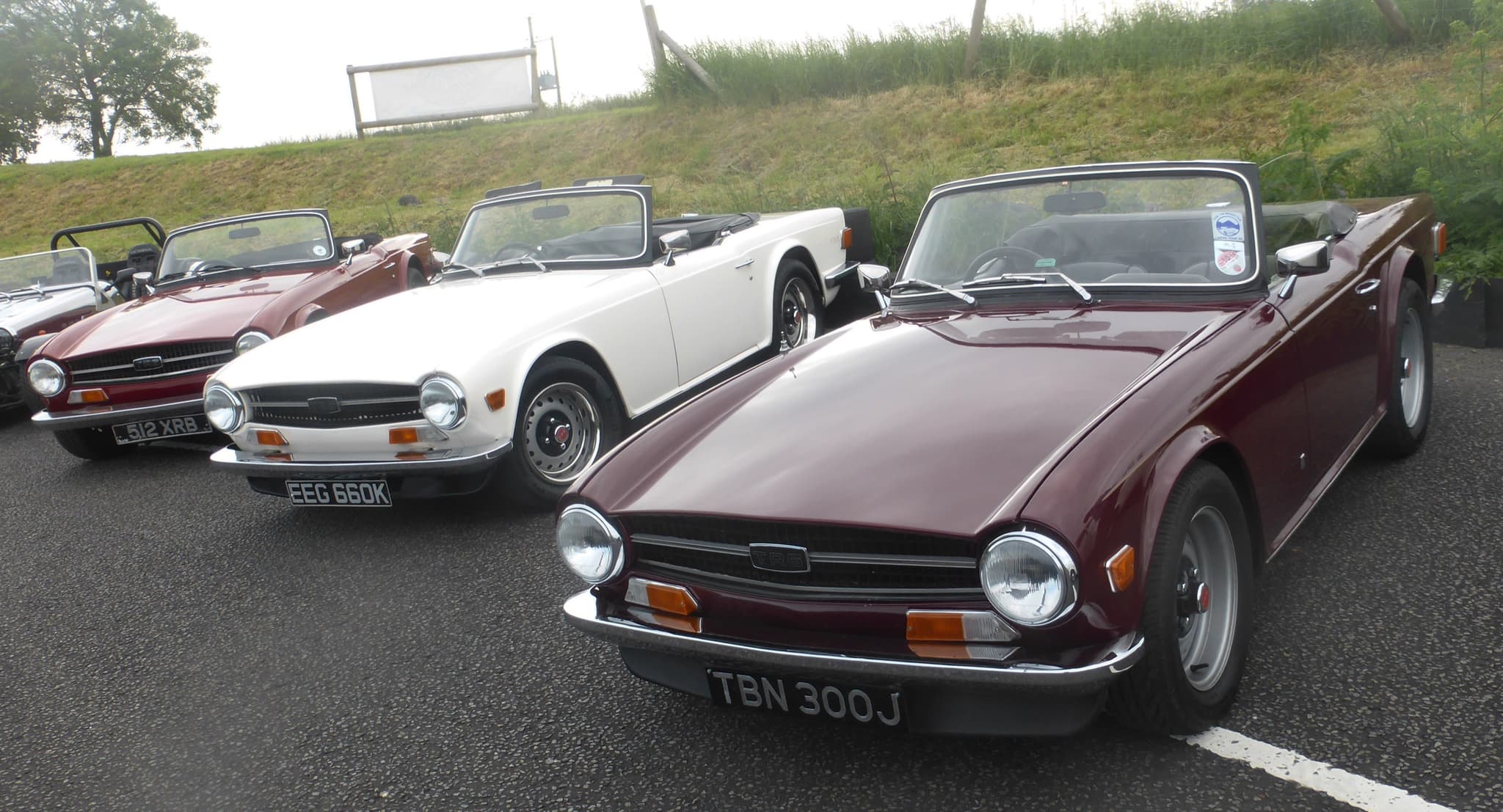
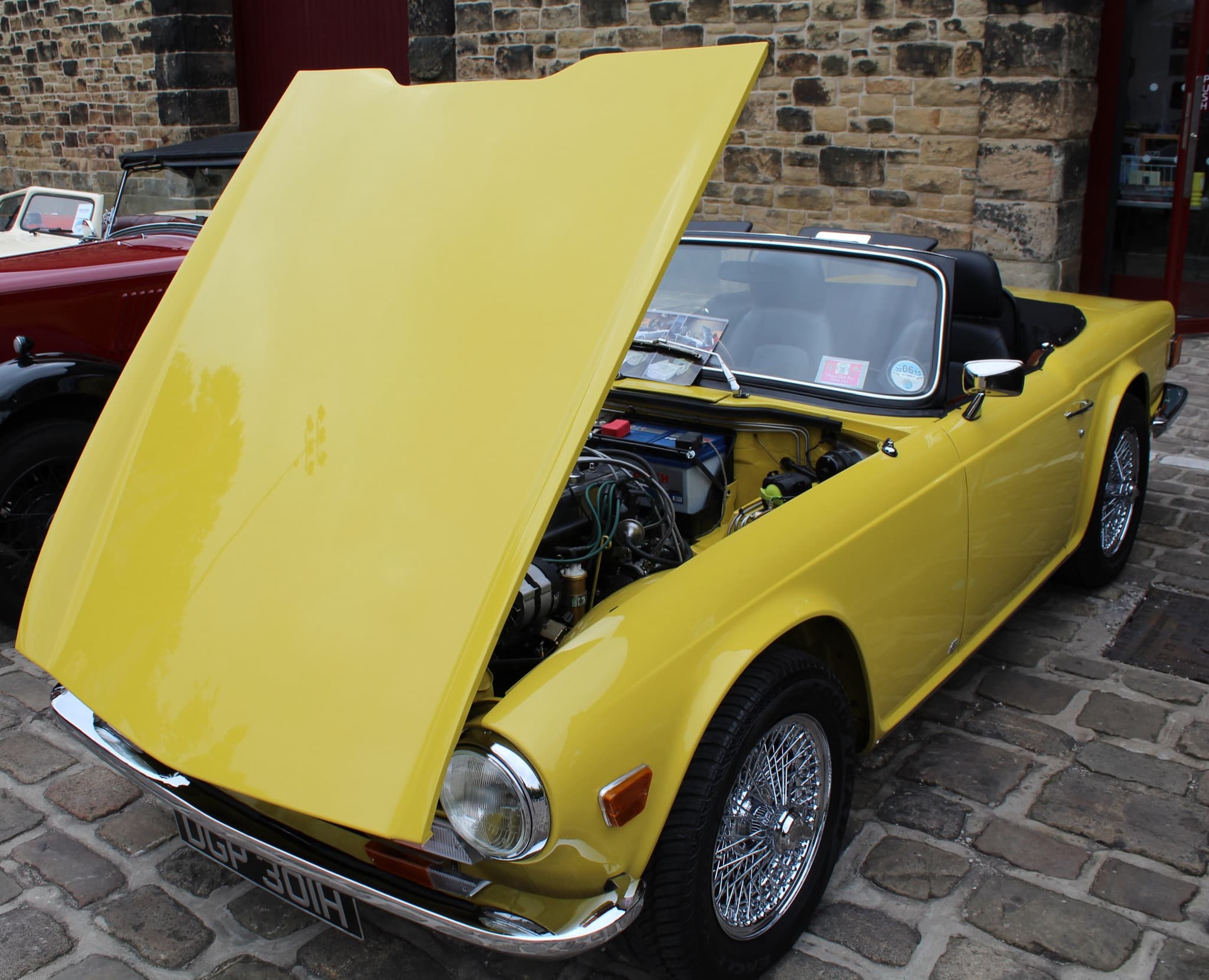
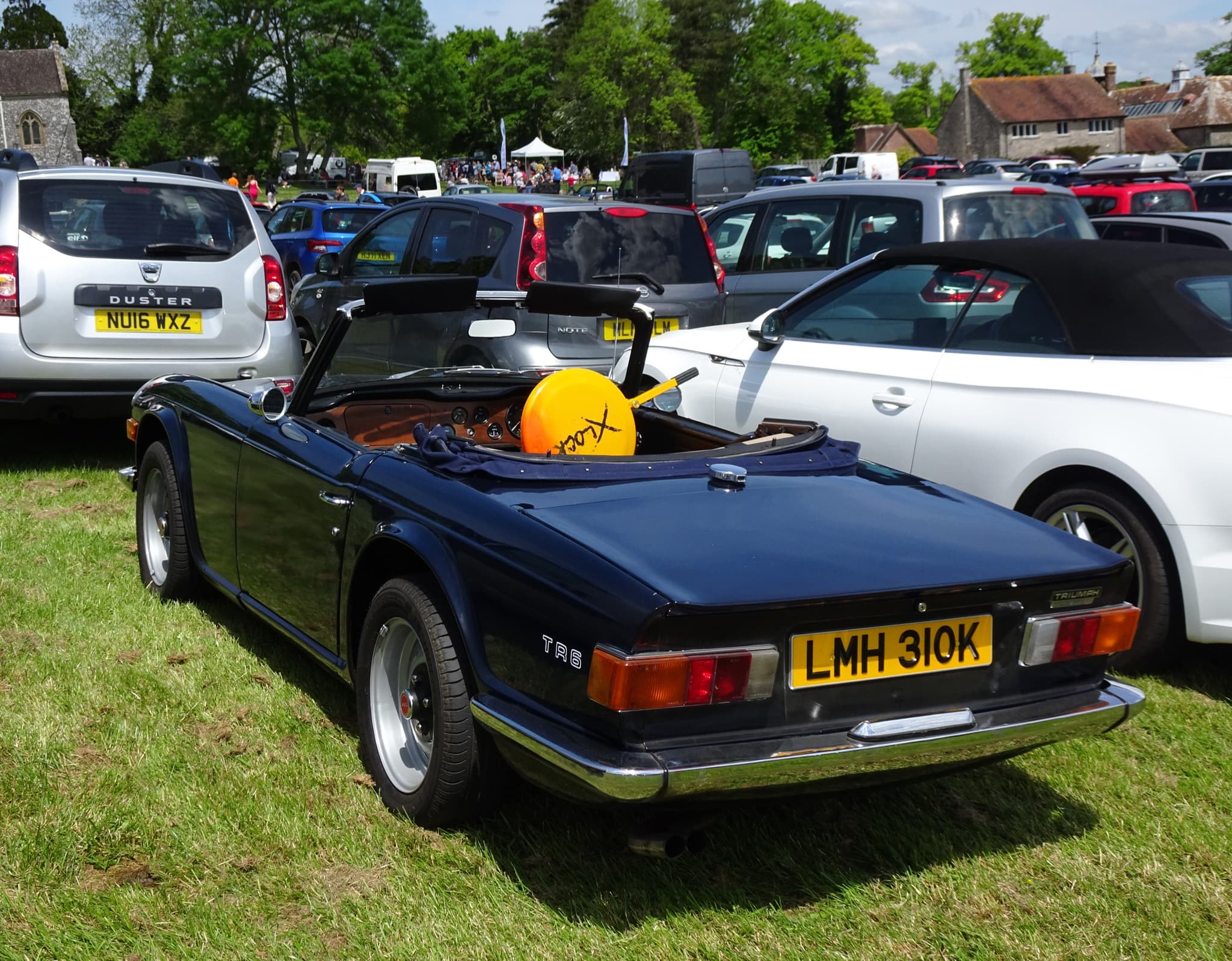
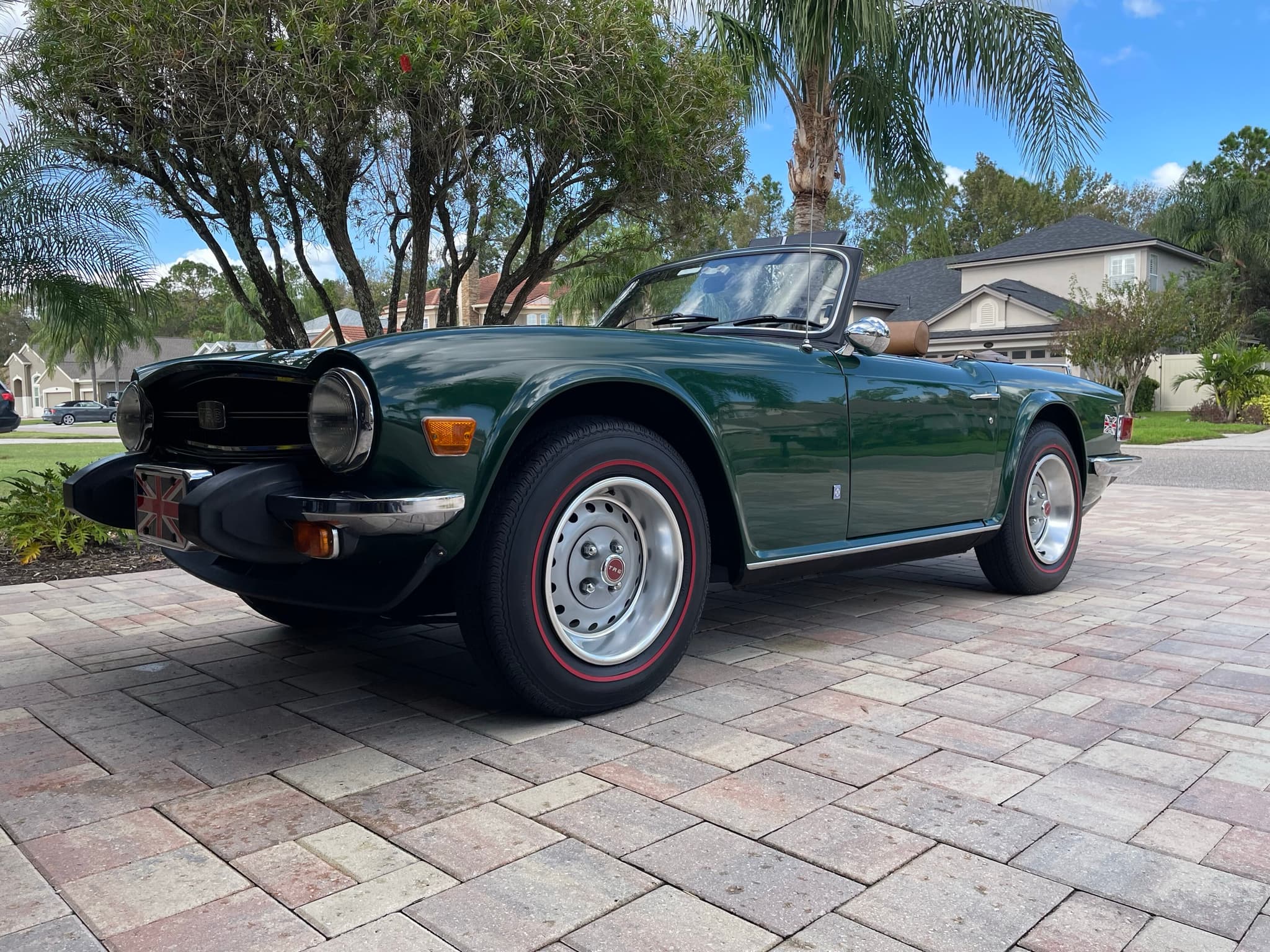
Triumph built the TR6 from 1968 to 1976 with one body and two fuel systems. Injection made the TR6 PI, sold in Britain and in most countries beyond North America; two carburettors made the US TR6, which went to the United States, Canada and, in the TR Register's words, other export markets it does not name. Each form came in two series, known by the first two letters of the commission number, and the line-up shows how many of each form were built.source 1source 2source 3
The series
Triumph never gave the TR6 Marks. Its own division, which the clubs and the parts catalogues follow, was by series:
| Series | Form | First built | Last built |
|---|---|---|---|
| CP | TR6 PI | CP25156, 28 November 1968 | CP77718, 21 September 1972 |
| CR | TR6 PI | CR169, 15 November 1972, after kits from CR1 | CR6701, 7 February 1975 |
| CC | US TR6 | CC25003L, 19 September 1968 | CC85737U, 5 October 1972, or August 1972 by the TR Register |
| CF | US TR6 | CF1U, 11 September 1972 | CF58328U, 15 July 1976 |
The dates are those of Rimmer's catalogue, which lists the first and last car of every year from the factory's build data. The CR cars differ from the CP cars in their engine, given a milder camshaft, and in the changes that came with the new series; the CF cars took the same body changes as the CR, and then a run of American changes, one model year at a time. The letter at the end of a number tells more: L for left-hand drive, which the American cars carried up to CC78520, U on later American cars, and O for overdrive. The figures for each series are side by side in the specifications, and identification explains the numbers in full.
Early and late
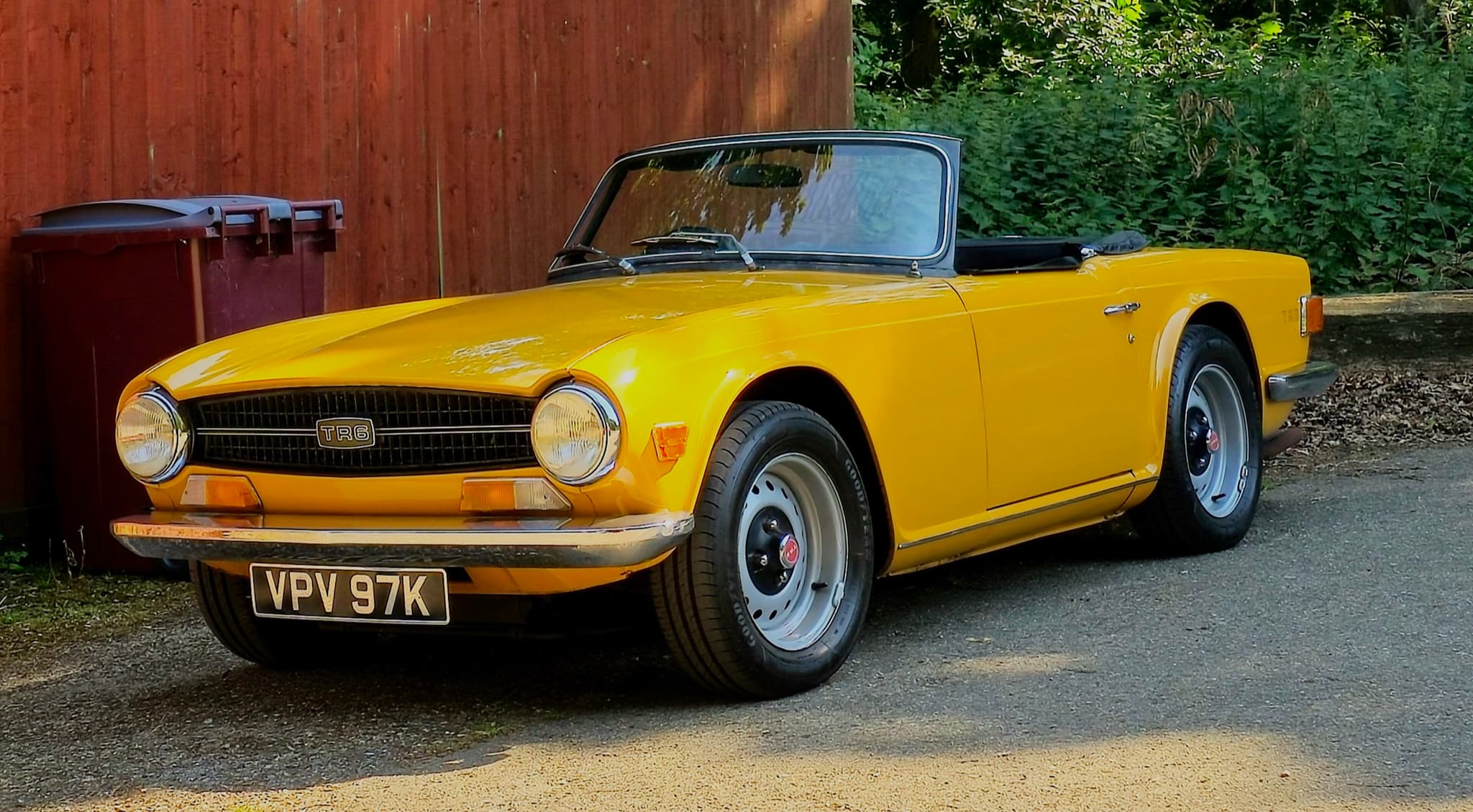
Owners divide the TR6 at the change of series, late in 1972, into early cars (CP and CC) and late ones (CR and CF):
| Early cars | Late cars | |
|---|---|---|
| Commission prefixes | CP and CC | CR and CF |
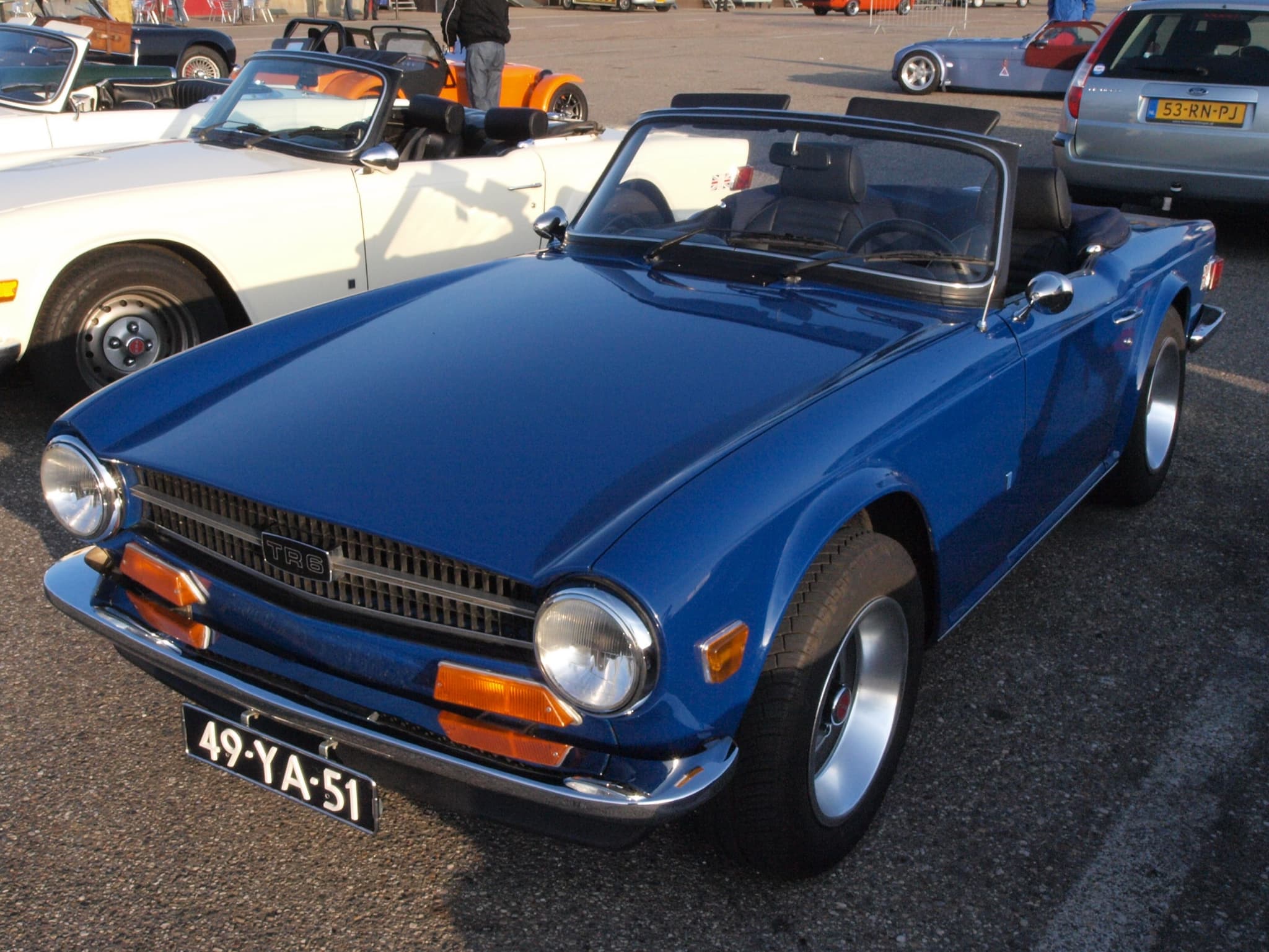
| Front | A chrome bumper alone | A spoiler under the bumper and chrome strips at the grille's edges |
| Instruments | The first dials, with an ammeter | Smaller dials, with a battery-condition meter |
| Overdrive | Laycock A-type, at first on second, third and top | Laycock J-type, on third and top |
| Injected engine | The first camshaft | A milder camshaft and revised metering |
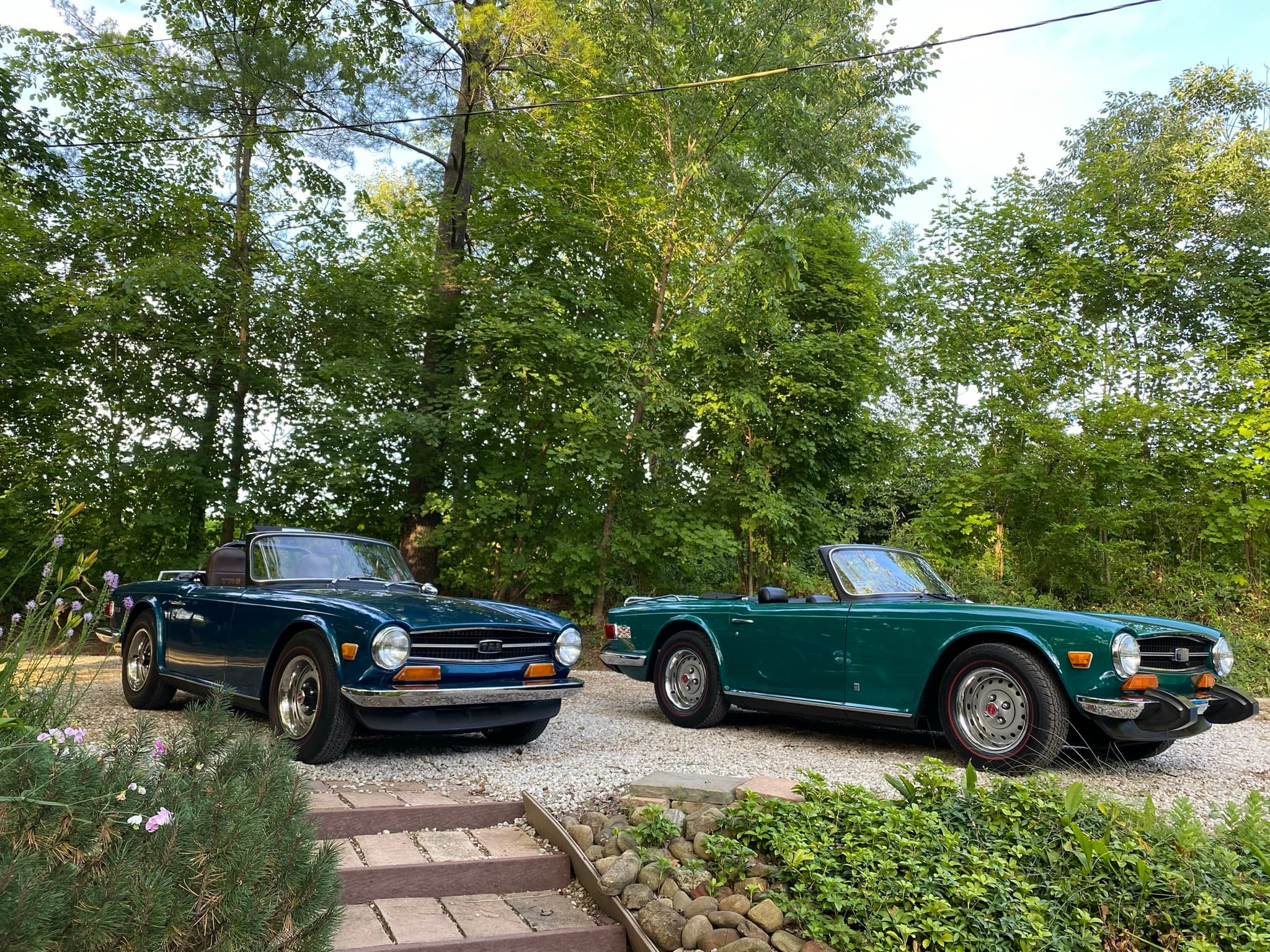
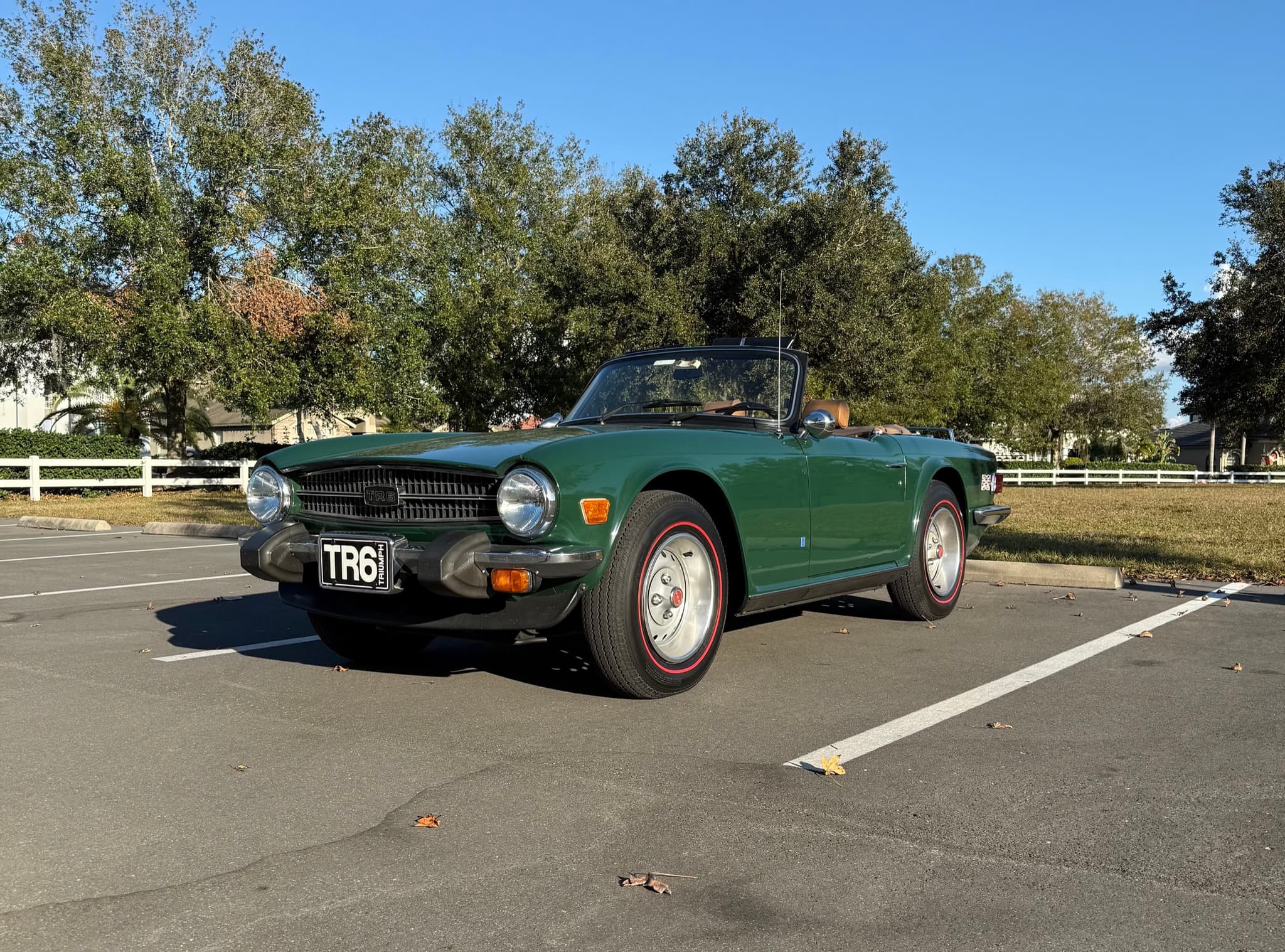
| American bumpers | Chrome | Rubber overriders from the 1974 model year; a raised front bumper from the 1975 model year |
Which is better is a matter of taste, and the Vintage Triumph Register's buyer's guide put both sides:
Some people prefer the earlier car with the higher compression engine and "clean" bumpers. Others prefer the later car with the better intake manifold, dual exhaust, bumper guards (necessary for any regularly used car), front spoiler, comfier seats, and Union Jack flags.
Production
No source says fully how its total was counted: only the TR Register's leaflet says that its figure includes the cars assembled in Belgium, and none says whether prototypes, or cars built in 1976 and sold in 1977, are in it. The TR Register gives a total, and a split between injected and carburetted cars that adds up to it; its leaflet prints the same total and gives a split a few cars smaller. The Vintage Triumph Register prints that total on one page and a higher one on another, the figure that Motor Trend printed in 1980 and that Ate Up With Motor and Classic & Sports Car use. The line-up shows both.
The TR Register also splits the injected cars between the home market and export, and its home-market figure is the one that the Vintage Triumph Register gives as the number sold in Britain. The TR6 PI's production readings give both. No source read gives the factory's output year by year.source 1source 3source 6source 11source 12source 13source 4source 2source 14
Markets
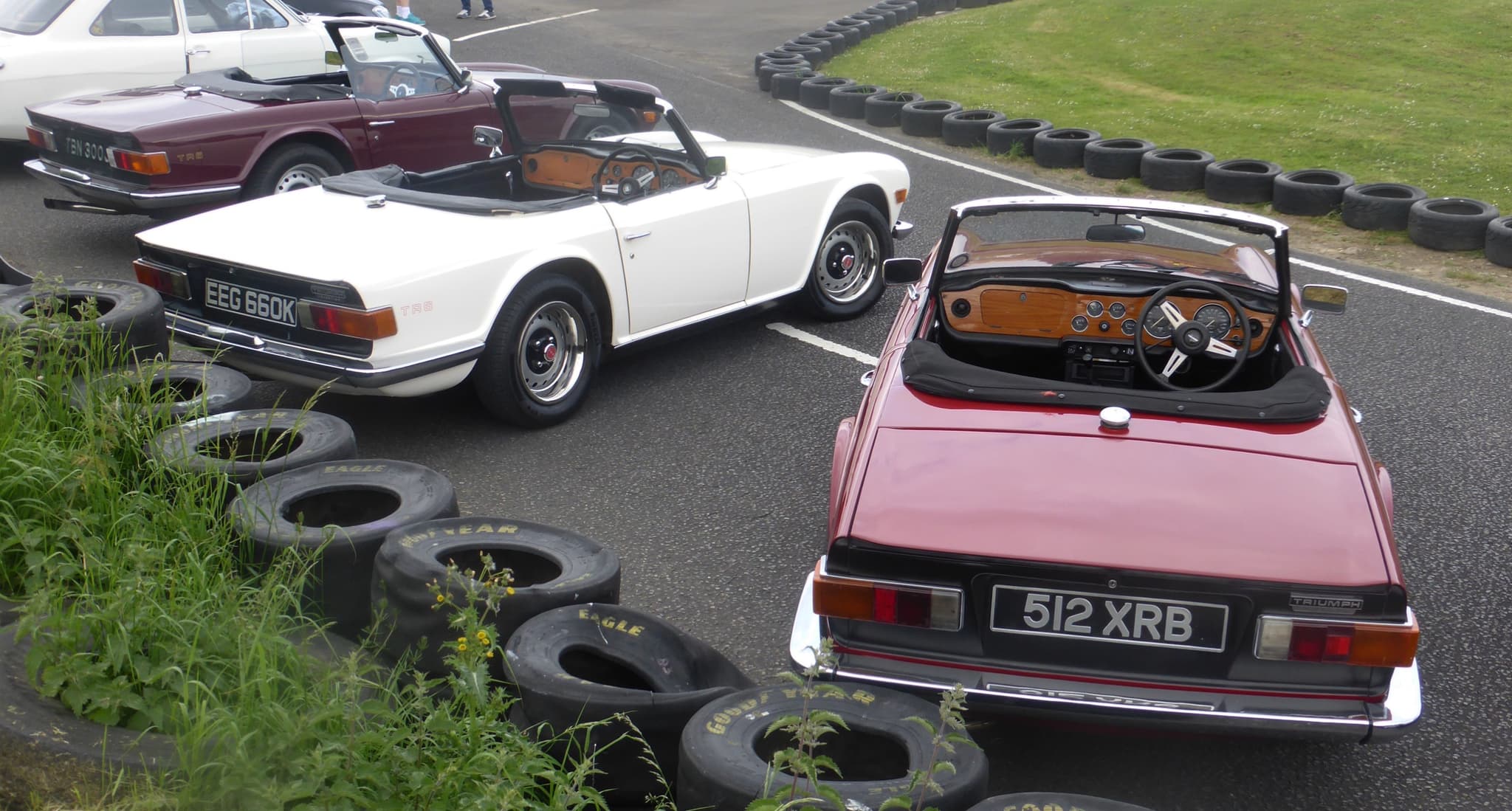
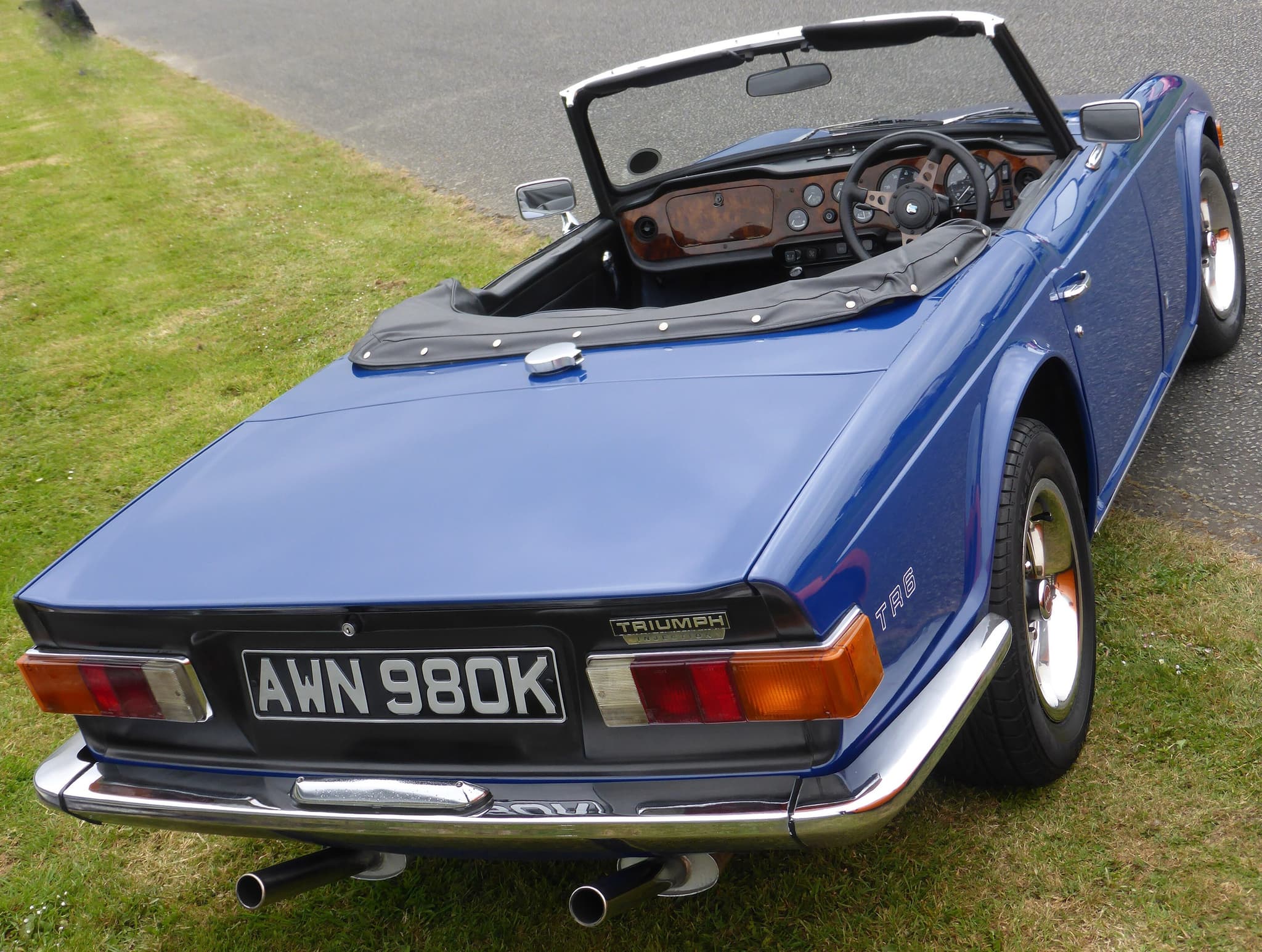
British cars were all injected, with right-hand drive, and ran on Dunlop SP Sport radials until Triumph changed to Michelin XAS tyres in 1973, for the time being, Motor Sport reported. They were sold as soft-top and hardtop models; the TR Register puts standard overdrive from CR5000, and by the end of 1974 Motor Sport found the tonneau cover standard too.
Continental Europe had the TR6 PI with left-hand drive, some of it assembled in Belgium. On CP cars for Germany the commission plate was fixed to the right-hand wheel arch under the bonnet, the TR Register notes, and German papers gave the injected engines' power to the DIN standard; according to TR-Register Deutschland, carburetted cars were delivered there too from 1976. In Italy, British Leyland's own brochure for the TR6 PI is dated February 1974.
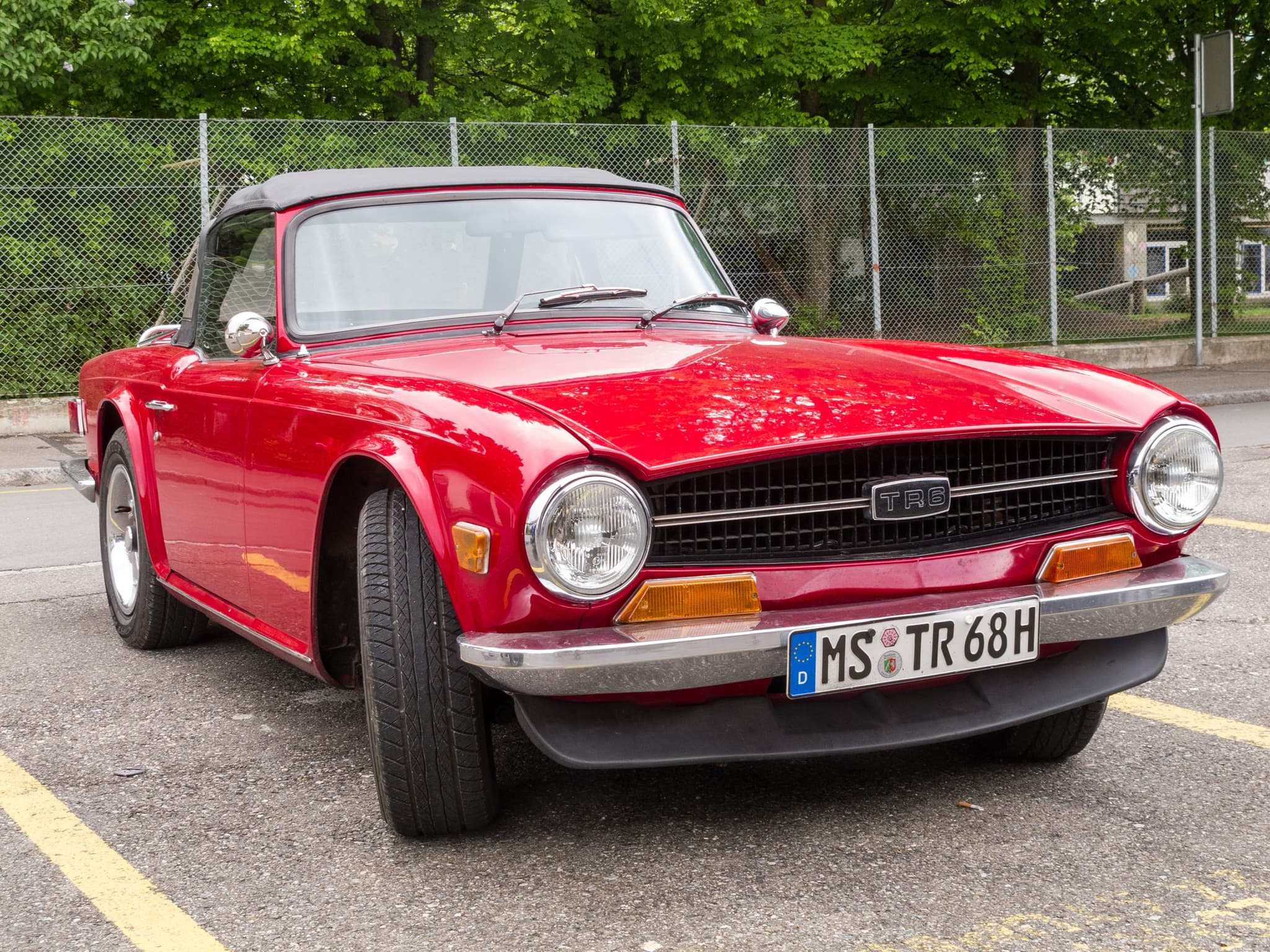
The carburetted car was the North American one, and Canada had it as well as the United States; AROnline writes that in Canada the TR6 and the TR7 appear to have been sold side by side for only one year. Of Australia no source read gives more than a letter to the importer's newsletter: in February 1971 a correspondent there wrote that "A TR-6 costs $4,500 by the time it is on the road", and that imported racing parts paid duty of 37½% and sales tax of 15% on top. No source read describes the TR6 in Sweden, Switzerland, Japan, South Africa or New Zealand.source 3source 15source 5source 16source 17source 4source 18source 19source 20source 1
Versions
Pictures, top to bottom: Andrew Bone from Weymouth, England, CC BY 2.0; Transpoecon, CC BY-SA 4.0.
Sources
Sources are given as plain text; their addresses are on the sources page.
- Primarymade at the time, by the maker or by people who were there
- Referenceserious later work: clubs, specialists, magazines, books
- Uncheckedencyclopaedias and enthusiast sites: cited beside a good source, named in the sentence, or marked Unchecked
- TR Register, "Triumph TR6 Buyers Guide" (facts sheet), summary: TR6 PI and TR6 Carb; the markets; Engine details: Lucas injection and twin Strombergs "for US and other export markets"; Facts & figures: the total, PI (home and export) and carburetted; Engine details: "US and other export markets". Reference
- Graham Robson (foreword), Triumph TR6 1969–1976 Parts & Accessories Catalogue, Rimmer Bros, edn 2.2 (source code TR600313), p. 5, Vehicle identification: the four series; p. 5, Vehicle identification: the first and last car of each series, with build dates; p. 5, the commission-number ranges. Reference
- TR Register, "Buyer Beware: TR6" (2 pp. PDF leaflet), p. 1, the series by model year; p. 1, the last CC (August 1972); the suffixes; the series and markets; p. 1, the late cars; the 1974 overriders; p. 1, the total "includes cars assembled in Belgium"; its own split; p. 1, right-hand drive; overdrive from CR5000; the German plate position; the Belgian cars. Reference
- Bruno Dwinger, "Geschichte, Typenkunde und Kaufberatung: British Leyland Triumph TR 6PI und TR 6 (Vergaser) – Die Karmann Autos", TR-Register Deutschland, c. 2010, 13 pp. (PDF), pp. 1–2, the PI and carburetted markets; p. 1, skipped numbers and cars taken for experiments; p. 2, DIN ratings; carburetted cars delivered from 1976. Reference
- Clive Richardson, "The Tale of a TR6", Motor Sport, Nov 1973, p. 54, p. 54, the CR's camshaft and the 1973 changes; p. 54, the list of 1973 changes; the overdrive; p. 54, Michelin XAS; Malines. Primary
- Vintage Triumph Register, "TR6" (history, year-by-year changes, US production table, buyer's guide), Spotter's Guide: the US model years; change list, '73 to '75; TR6 Buyer's Guide, "Some people prefer the earlier car …"; production page and history text: the two totals. Reference
- Triumph Sports Owners Association, Triumph Sports Owners Association Newsletter, January 1973, Jan 1973 (vol. 19 no. 1), p. 2, the 1973 model year. Primary
- Triumph Sports Owners Association, Triumph Sports Owners Association Newsletter, December 1973, Dec 1973, p. 2, the 1974 bumper guards. Primary
- Triumph Sports Owners Association, Triumph Sports Owners Association Newsletter, December 1974, Dec 1974, the 1975 model year. Primary
- Wikipedia (EN), "Triumph TR6", 2026, "the only factory-recognised change". Unchecked
- Aaron Severson, "Grandfather's Ax: The Many Evolutions of the Triumph TR4, Part 2: TR5, TR250, and TR6", Ate Up With Motor, 7 Nov 2012, TR in twilight: the higher total. Reference
- Charlie Calderwood, "Datsun 240Z vs Triumph TR6: the battle for America", Classic & Sports Car, 1 Feb 2023, factfile: the higher total. Reference
- Fred M. H. Gregory, "TR8 V-8: A mighty Triumph" (road test), with the sidebar "A String of Triumphs", Motor Trend, Jun 1980, sidebar "A String of Triumphs": the higher total, 1980. Primary
- Wikipedia (DE), "Triumph TR6", 2026, Roger Williams's figures, 2014. Unchecked
- Bill Boddy, "Rumblings" (TR6 PI and 2.5 PI Mk II), Motor Sport, Mar 1971, p. 34, p. 34, Dunlop SP Sport tyres. Primary
- Clive Richardson, "The continuing tale of a TR6", Motor Sport, Dec 1974, p. 53, p. 53, final paragraph: hardtop model; overdrive and tonneau standard. Primary
- Standard-Triumph, Triumph TR6 P.I. (sales brochure), UK, Dec 1970, publication 426/1270/ENG, the soft-top and hardtop models; the steering lock. Primary
- British Leyland, Triumph TR6 PI (sales brochure), Italy, 2/1974, "Un 'trionfo'": the Italian brochure, February 1974. Primary
- Triumph Sports Owners Association, Triumph Sports Owners Association Newsletter, February 1971, Feb 1971 (vol. 17 no. 2), p. 4, a correspondent in Australia. Primary
- Chris Cowin, "History: Exporting British cars to Canada – Part Two: The British Leyland Years", AROnline, 19 Aug 2025, Canadian TR6s; the one-year overlap with the TR7. Reference